You are paying for QuickBooks for accounting, HubSpot for CRM, Gusto for payroll, and another tool for project tracking. On paper, everything looks organized. In practice, your team still exports reports manually, checks numbers across platforms, and keeps side spreadsheets because important systems do not fully connect.
That is a common point for many small businesses after a few years of growth. Software gets added one tool at a time to solve immediate needs. Over time, the software stack expands, but efficiency does not always improve at the same pace.
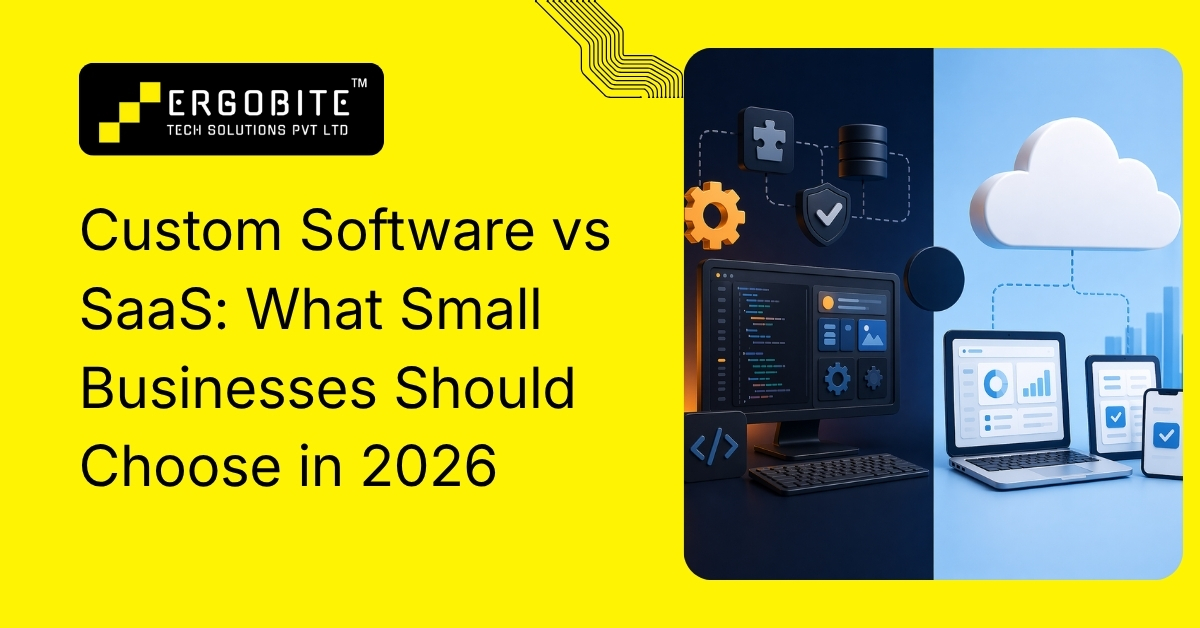
That is where the SaaS versus custom software decision becomes serious. It is no longer about which option sounds modern. It is about choosing software that matches how your business actually runs.
What SaaS Really Means for a Small Business?
SaaS stands for Software as a Service. It refers to software you access through the cloud under a subscription model instead of installing and owning it yourself.
Most small businesses already rely on SaaS every day. QuickBooks manages accounting, HubSpot handles customer relationships, Slack supports internal communication, Shopify powers ecommerce operations, and tools like Asana or Monday.com help teams manage projects.
The appeal is obvious. SaaS products are ready to use immediately. There is no development cycle, no infrastructure setup, and no technical ownership on your side. You pay monthly or annually, and the provider manages updates, security, and hosting.
This model works well because the software is built around common business needs. If your processes are standard, SaaS often solves the problem quickly without requiring heavy investment.
The trade-off is that SaaS products are designed for broad market use, not for the specific way your business may operate.
What Custom Software Actually Means?
Custom software is built specifically for your business rather than for a broad customer base.
Instead of choosing features from a predefined product, your software is developed around your internal workflow, approval logic, reporting requirements, integrations, and customer operations.
For example, a manufacturing company may need order management tied directly to production planning, inventory movement, customer pricing rules, and internal approvals. Off-the-shelf tools often handle parts of that process, but rarely the full flow in one system.
Custom software allows all of those parts to work together because the system is designed around the business itself.
That does not always mean building a large platform from scratch. In many cases, businesses begin with one focused internal tool that solves a specific operational gap, then expand gradually as needs evolve.
Why SaaS Feels Affordable First but Gets Expensive Over Time?
SaaS is attractive because the entry cost is low. A small business can begin using a tool for a modest monthly fee and avoid large upfront spending.
The problem is that subscription software rarely stays limited to one platform.
Many organizations now overspend on SaaS because software purchases happen across teams without central review, creating overlapping subscriptions and unused licenses. Research from Zylo also shows that a meaningful share of SaaS licenses often remain inactive while businesses continue paying for them.
The cost issue becomes more visible when multiple systems are involved.
One platform handles finance. Another supports sales. A third covers operations. A fourth manages support. Then integration tools are added to move data between them.
What began as affordable software gradually becomes a recurring operating expense that grows every year.
Why Custom Software Often Becomes Financially Practical Later?
Custom software requires a higher upfront investment because development, testing, and implementation happen before launch.
But once the system is live, the cost behaves differently.
There are no user-based pricing increases every time your team expands. Features are not locked behind higher subscription tiers. Integrations are built directly into the system instead of being purchased separately.
For businesses with stable internal processes and growing operational volume, long-term software costs often become easier to predict with custom systems than with expanding subscription stacks.
This is especially true when multiple departments depend on software daily.